
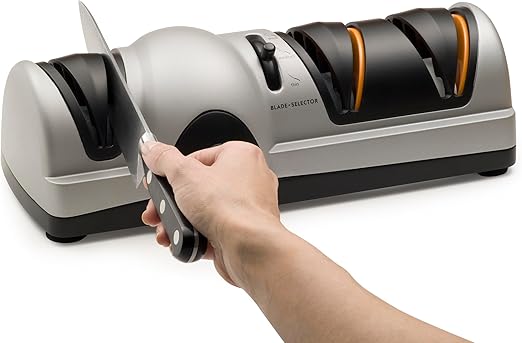
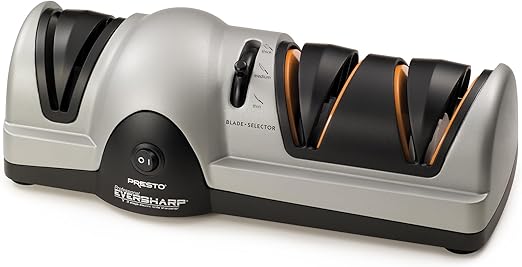
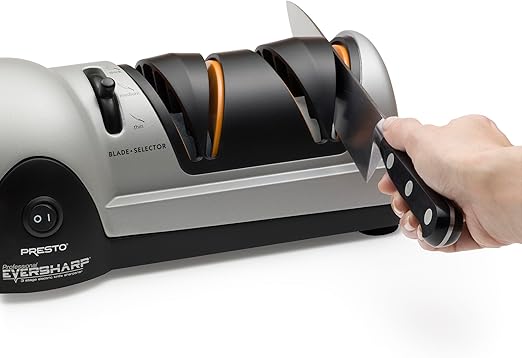
Understanding the 3-Stage Sharpening System
The 3-stage sharpening system represents a systematic approach to obtaining a professionally sharpened edge on both kitchen and sport knives. This innovative method is designed to provide a comprehensive means of sharpening that surpasses traditional techniques, offering distinct advantages in terms of efficiency and effectiveness. Each stage of the system serves a specific purpose, working synergistically to enhance the knife’s performance.
The first stage focuses on the coarse sharpening process. Here, the system utilizes a diamond abrasive to reshape and refine the blade’s edge. This stage is essential for removing nicks and dents, thus preparing the knife for the subsequent sharpening stages. Utilizing the correct blade thickness selector during this process is crucial, as it helps in adjusting the guides to the appropriate sharpening angle, which varies depending on the type of knife. For instance, a hunting knife may require a different angle compared to a chef’s knife.
The second stage involves medium grit sharpening. This segment of the system begins the process of honing the edge achieved in the first stage. The medium grit stones help refine the blade’s edge further, ensuring a smoother finish. This is key to enhancing the overall sharpness, allowing for better performance during cutting tasks. Proper adjustment of the guides remains essential at this juncture to maintain the optimal angle for various knives.
Finally, the third stage is dedicated to honing and polishing the blade. This step ensures a razor-sharp finish by removing any burrs created during the sharpening process. The finesse achieved in this stage not only enhances the sharpness but also improves the overall longevity of the blade. The integration of a 3-stage sharpening system, therefore, offers a systematic solution that guarantees professional results can be obtained conveniently at home, suitable for both kitchen and sporting knives alike.
Mastering the Sharpening Process at Home
Sharpening knives at home can be a straightforward process, especially when utilizing a 3-stage sharpening system. To begin, it is essential to select the right thickness of the blade. The thickness will dictate the choice of the appropriate sharpening stage, allowing for a tailored approach to knife maintenance. For instance, thicker blades may require more aggressive sharpening techniques in the initial stages, whereas thinner blades can often benefit from more delicate work. Understanding the specific type of blade you are working with is crucial for effective sharpening.
As you embark on this sharpening journey, safety should be your foremost concern. Ensuring a stable grip on the knife is essential not only for your safety but also for achieving the most efficient results. The use of a non-slip surface or a sharpening holder can significantly enhance stability. When holding the knife, maintain a firm but relaxed grip, positioning your fingers away from the cutting edge. This orientation promotes both safety and precision as you work through each sharpening stage.
One of the significant advantages of a 3-stage sharpening system is the inclusion of blade guides. These guides are designed to maintain the perfect angle throughout the sharpening process, which eliminates the guesswork typically associated with manual sharpening. By aligning the blade with the guide, users can achieve consistent and uniform sharpening results. Each stage of the sharpening process works in synergy to gradually refine the blade’s edge, with the final stage often employing an extra-fine-grit ceramic wheel. This stage is pivotal in achieving a razor-sharp finish. The fine grit polishes the edge, leaving it smooth and ready for use.
By understanding these elements, you can feel confident in sharpening various types of knives effectively at home. With practice, the process will become more intuitive, leading to consistently professional results.




Reviews
There are no reviews yet.